

How to Find and Choose the Right Keywords for SEO
If you want your website to show up in search results, keywords matter.
They help search engines understand what your content is about and connect your website with people searching for your services.
But choosing keywords isn’t just about adding random phrases throughout your website.
The right keywords can help bring in qualified traffic and potential customers. The wrong ones can make it difficult for your website to rank—or attract visitors who aren’t actually looking for what you offer.
So how do you find the right keywords for your business?
Let’s break it down.

What Are SEO Keywords?
SEO keywords are the words and phrases people type into search engines when looking for information, services, or products.
For example, someone searching for:
“website designer near me”
“SEO services for small businesses”
“how to improve website traffic”
…is using keywords.
Your goal is to understand what your ideal audience is searching for and create content around those topics.
Start with What Your Customers Are Actually Searching For
One of the biggest mistakes businesses make is choosing keywords based on what they would search for instead of what their audience is actually typing into Google.
Try thinking about:
Questions your clients frequently ask
Problems they’re trying to solve
Services they may not fully understand yet
For example, a business owner may search “why isn’t my website getting traffic” instead of a technical term like “organic traffic optimization.”
Focusing on real-world search behavior helps you choose keywords that align with actual user intent.
Use Keyword Research Tools
Keyword research tools can help you discover:
Search volume (how many people search for a term)
Competition level
Related keyword ideas
Common questions within your niche
Some helpful tools include:
Google Keyword Planner
Ubersuggest
SEMrush
Ahrefs
AnswerThePublic
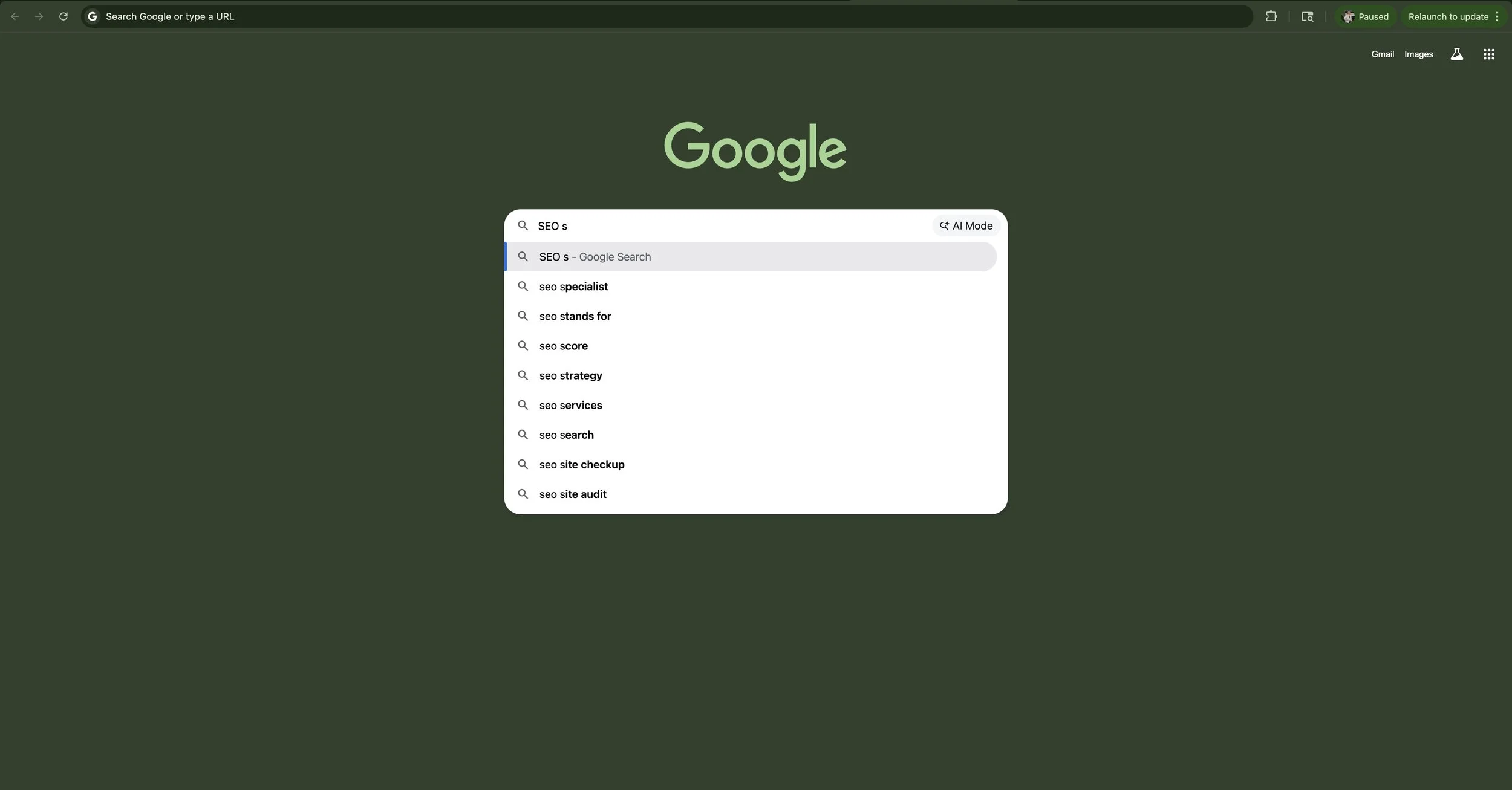
You can also use Google itself for research.
Try typing a phrase into the search bar and looking at:
Google autocomplete suggestions
“People Also Ask” questions
Related searches at the bottom of the page
These are often great indicators of what people are actively searching for.
Don’t Target Keywords That Are Too Broad
Broad keywords may seem appealing because they have high search volume—but they’re also extremely competitive.
For example:
“web design”
“marketing”
“SEO”
Trying to rank for these terms as a small business can be very difficult.
Instead, focus on more specific keywords that better match your audience and services.
Examples:
“website design for small businesses”
“local SEO services in [your city]”
“Squarespace SEO tips”
These are often called “long-tail keywords,” and they typically attract more targeted visitors.
Avoid Keywords That Are Too Niche
On the other hand, keywords can also become too specific.
If a keyword has very little search volume, you may rank for it—but no one may actually be searching for it.
The goal is to find a balance between:
Relevance
Search demand
Competition level
This is why keyword research tools are helpful—they provide data that helps guide your decisions.
Think About Search Intent
Not every search means the same thing.
Someone searching:
“What is SEO?” is likely looking for information
“SEO services near me” is likely looking to hire someone
This is called search intent.
Understanding intent helps you create content that matches what the user is actually looking for.
In general, keywords fall into categories like:
Informational
Navigational
Transactional
A strong SEO strategy usually includes a mix of all three.
Use Keywords Naturally
One of the most common SEO mistakes is keyword stuffing—forcing keywords into content repeatedly in an unnatural way.
Search engines are much smarter than they used to be.
Instead of repeating the same phrase excessively, focus on creating helpful, well-structured content that naturally includes your keywords.
Places where keywords are especially useful include:
Page titles
Headers
Meta descriptions
URLs
Image alt text
The goal is clarity and relevance—not repetition.
Create Content Around Your Keywords
Once you identify strong keywords, use them to guide your content.
Blog posts are one of the best ways to do this.
For example, if people are searching:
“how to improve website traffic”
“what is local SEO”
“why my website isn’t converting”
…those can become blog topics.
When writing content, avoid simply repeating what every other website says.
Add your own insights, experiences, examples, or perspective whenever possible. This makes your content more valuable and helps it stand out.
Monitor and Adjust Over Time
Keyword strategy isn’t something you set once and never revisit.
Search trends change, competition changes, and your business may evolve over time.
Tools like Google Search Console and Google Analytics can help you monitor:
Which keywords bring traffic
Which pages perform best
Where visitors are coming from
This data helps you continue improving your strategy over time.
The Bottom Line
Choosing the right keywords is one of the most important parts of SEO.
The best keywords are the ones that connect your business with the people already searching for what you offer.
When you combine thoughtful keyword research with helpful content and a strong website structure, your website has a much better chance of attracting the right audience.
Want to Improve Your Website’s SEO Strategy?
If you’re unsure which keywords your business should be targeting—or your website isn’t getting the visibility you expected—it may be time to take a closer look at your SEO strategy.
With the right approach, keywords can become more than just search terms—they can become opportunities for real business growth.